Your EV
Your round trip on a normal day, there and back.
This charge
Measure this against your own daily round trip.
Includes 10% estimated charging losses. Some models draw partly on global specifications; confirm with a dealer. A dash in a result means a required specification is unavailable.
How long it takes
Vehicle AC limit: 7 kW. Home speeds are capped at this limit; unknown limits show no time estimate. The home charger you pick here sets the charging window in the solar timeline below, and the charger load in “Can your home supply handle an EV charger?”. DC estimates are capped at the vehicle's own DC limit and exclude charge tapering.
When you charge matters.
Using the EV and charge level you selected above, see how moving your charging time changes how much could come from solar versus the grid. Add home battery storage and the solar window stretches into the evening.
The solar and battery figures here cover the car only. The rest of the house is left out, so the sun and storage shown as available to the car are not competing with the geyser, pool pump or anything else drawing at the same time.
—
Drag the window or use its arrow keys to change the start time. The teal tail on the curve is sunshine stored during the day, carrying the charge past sunset. Charging can continue past midnight. Illustrative solar offset only, assuming sufficient solar capacity. Battery figures assume the bank is filled by solar each afternoon and is available to the car from 18:00, with no household draw taken off it. Real contribution depends on system size, household use, inverter limits and weather. Unknown AC limits disable the timeline.
Grid electricity cost only; assumes sufficient solar and battery capacity.
Based on the vehicle, tariff and charging window you selected, at 40 km a day (1,200 km a month). The petrol figure is the same 72,000 km in a car doing 8.0 L/100km at R26.92/L (fuel only, before servicing). Neither figure is escalated: both hold today's prices flat for the five years.
Can I drive it to the coast?
Pick a route and a cruising speed. We'll show where your battery runs low, how many fast-charge stops you need and what they add to the trip. Uses the EV selected above.
—
The fastest path charges only what each leg needs, keeping the battery in its quick-charging range, and weighs that against the few minutes every extra stop costs.
—
Assumes two adults, luggage and aircon on a mild day. Charging slows as the battery fills, and every stop carries about five minutes for pulling off and plugging in, both of which are in these figures. The dots below the axis show known public fast-charge sites on this route, blue for the ultra-fast ones. The charge you leave home with is priced at your own blended rate, the tariff and solar share set in the charging window above, and only the part of it you actually use on the road is counted. Public stops are priced at each network's current rate: about R8.45/kWh on GridCars and about R9.15/kWh at CHARGE's off-grid solar sites. Rubicon sits nearer R7.00, and OEM-branded chargers can run past R11. Enter your own price to override all of them. Sites, prices and distances are approximate and the network changes often; check a live map such as GridCars, Rubicon or PlugShare, and that the charger is working, before you leave.
Can your home supply handle an EV charger?
Check the charger you picked above against your main breaker and
everything else running on a busy evening.
Can your home supply handle an EV charger?
Check the charger you picked above against your main breaker and everything else running on a busy evening.
Tick what could be running at the same time as the car on a busy evening. If the total goes past your main breaker, the lights go out.
Soon the car will power the house too.
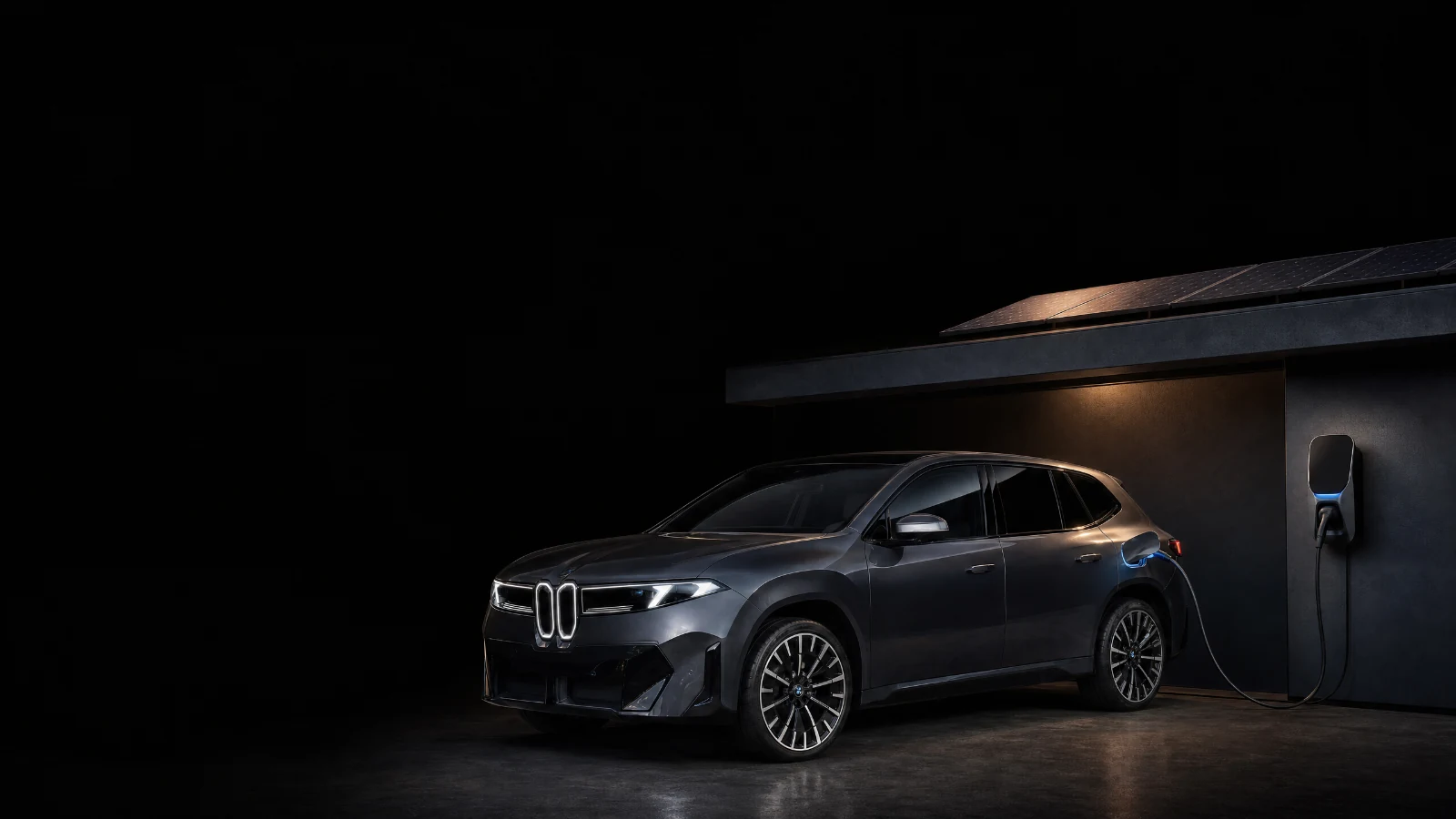
Some cars already do it. The Volvo EX90 can run a home from its battery. The EX30 is built to the same standard, and BMW has added vehicle-to-grid to the iX3.
The appeal is simple arithmetic. A 60 kWh car battery holds about six times what a 10 kWh home bank does. That is the difference between covering an evening and covering a few days.
Whether your house can ever draw on it comes down to the inverter, the coupling and the protection you fit now, not the car you buy later. That is a design decision, and an expensive one to revisit, so it is worth a conversation with someone who plans these systems every day, ideally before anything goes on your roof.